






Identify your refinancing goals: Do you want to lower monthly payments, pay off your
mortgage faster, access home equity, switch to a fixed-rate mortgage, or improve your
credit?
02
Assess the Costs:
Refinancing involves costs like closing fees, appraisals, or originating fees. We'll
calculate these and compare them to potential savings to ensure they benefit you
financially.
03
Check Your Credit Score:
A higher credit score can result in better refinancing terms and lower interest rates.
It's important to review your credit report for inaccuracies.
04
Compare Interest Rates:
We’ll analyze current interest rates compared to your mortgage to determine if
refinancing can effectively lower your payments and total costs.
05
Consider the Break-even Point:
Calculating the break-even point for refinancing is crucial. It's when your savings from
refinancing surpass the associated costs. Refinancing could be wise if you plan to stay
in your home beyond this point.
06
Gather Necessary Documentation:
Refinancing requires documents like income verification, tax returns, bank statements,
and property information, similar to the initial mortgage process. Having these ready
will streamline the process.
07
Consult with NNB Financial:
Our expert team is here to offer personalized advice during your refinancing journey.
We'll evaluate your finances, explore options, and help you make informed decisions that
align with your goals.
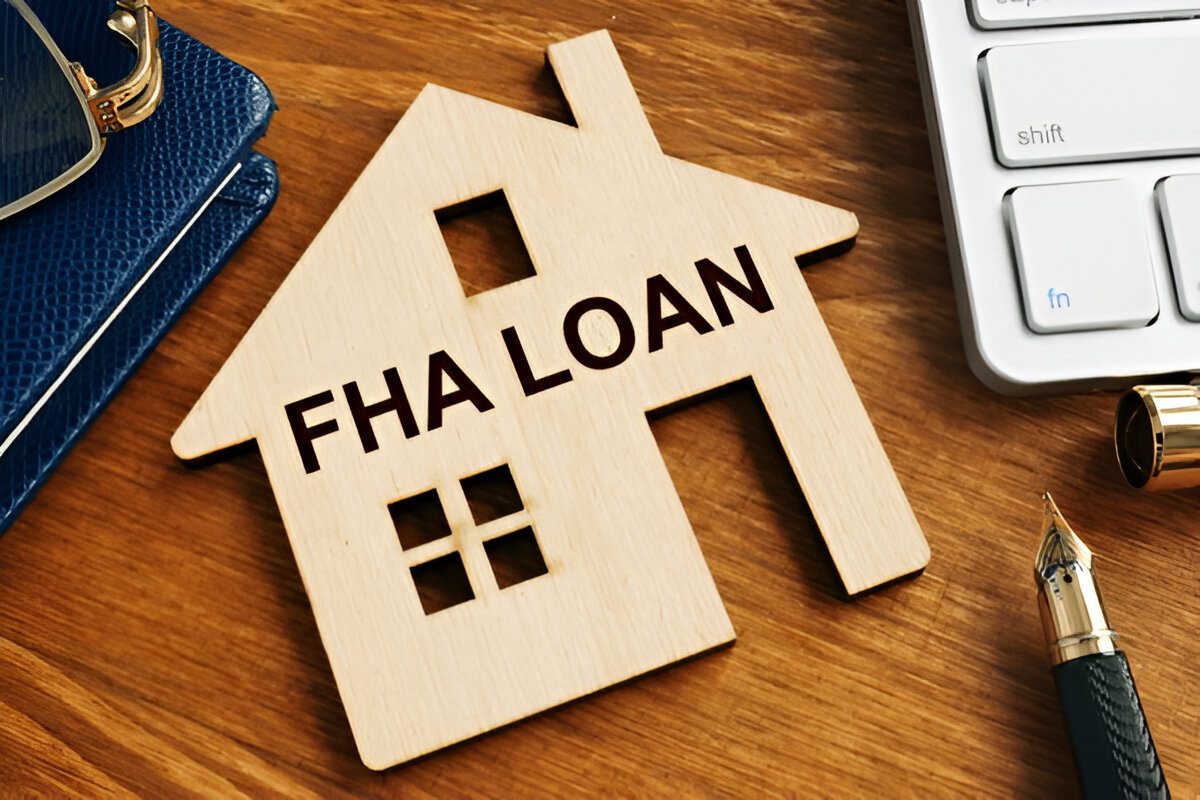
FHA
An FHA loan is a mortgage insured by the Federal Housing Administration (FHA), designed to
make homeownership more accessible to a wide range of borrowers. These loans are
particularly beneficial for first-time homebuyers and individuals with lower credit scores
or limited funds for a down payment.
Key features of FHA loans include:
Low Down Payment:
Borrowers can secure a home with a down payment as low as 3.5%, making it easier to get
started.
Flexible Credit Requirements:
FHA loans are more forgiving of lower credit scores, typically requiring a minimum score
of 580 (or 500 with a higher down payment).
Competitive Interest Rates:
These loans often feature competitive interest rates, helping reduce monthly mortgage
payments.
Mortgage Insurance Premiums (MIP):
FHA loans require both an upfront MIP and annual premiums, which protect lenders while
enabling borrowers to access favorable terms.
FHA loans are ideal for those seeking a more affordable path to homeownership while still
benefiting from the security of government backing.

VA
A VA loan is a mortgage backed by the U.S. Department of Veterans Affairs (VA), designed to
help eligible military service members, veterans, and their families achieve homeownership.
This program offers significant benefits, making it one of the most attractive options for
those who qualify.
Key features of VA loans include:
No Down Payment:
Eligible borrowers can purchase a home with no down payment, making homeownership more
accessible.
Competitive Interest Rates:
VA loans typically feature lower interest rates compared to conventional loans.
No Private Mortgage Insurance (PMI):
Unlike many low-down-payment loans, VA loans do not require PMI, reducing monthly costs.
Flexible Credit Requirements:
VA loans are more forgiving of lower credit scores, offering flexibility for a range of
borrowers.
Limited Closing Costs:
The VA regulates and limits certain closing costs, helping borrowers save money upfront.
Lifetime Benefit:
Eligible individuals can use their VA loan benefits multiple times, provided previous
loans are repaid or assumed by eligible parties.
VA loans are a powerful tool for military members and their families, providing financial
advantages and flexibility to achieve their dream of homeownership.
Rehab Loan
A rehab loan, also known as a renovation loan, is designed to help borrowers finance the
purchase of a home and the cost of its repairs or renovations in a single mortgage. These
loans are ideal for those looking to buy a fixer-upper or update their current home to
better meet their needs.
Key types of rehab loans include:
FHA 203(k) Loan: Backed by the Federal Housing Administration, this loan
allows borrowers to combine the purchase price of a home and renovation costs into one loan.
It’s available in two types:
Standard 203(k): For major renovations or structural repairs.
Limited 203(k): For smaller repairs and cosmetic improvements (up to
$35,000).
Fannie Mae HomeStyle Loan: A conventional loan option that finances both
purchase and renovation costs, offering flexibility for primary residences, second homes,
and investment properties.
VA Renovation Loan: Available to eligible veterans and active-duty military
members, this loan allows for the purchase or refinance of a home that needs repairs, with
costs included in the VA loan.
Key benefits of rehab loans:
One Loan, One Payment:
Combines home purchase and renovation costs into
a single mortgage.
Flexible Renovation Options:
Covers everything from minor cosmetic
upgrades to major structural repairs.
Increased Property Value:
Allows homeowners to improve and customize
their homes while potentially boosting property value.
Rehab loans are an excellent option for buyers who want to transform a house into their
dream home or homeowners looking to update and modernize their living space.
USDA Loan
A USDA loan, backed by the U.S. Department of Agriculture, is a mortgage designed to promote
homeownership in rural and suburban areas. It offers affordable financing options for low-
to moderate-income borrowers who meet specific eligibility requirements.
Key features of USDA loans include:
No Down Payment:
USDA loans allow qualified borrowers to purchase a home with 100% financing, eliminating
the need for a down payment.
Low Interest Rates:
These loans typically feature competitive interest rates, helping reduce monthly
mortgage payments.
Flexible Credit Requirements:
While creditworthiness is evaluated, USDA loans are more forgiving of lower credit
scores than conventional loans.
Reduced Mortgage Insurance Costs:
USDA loans require a modest upfront guarantee fee and an annual fee that is often lower
than private mortgage insurance (PMI) on conventional loans.
Property Eligibility:
Homes must be located in USDA-approved rural or suburban areas, and borrowers can verify
property eligibility through the USDA's online tool.
Eligibility Requirements:
Income must not exceed the USDA's income limits for the area.
The home must be the borrower's primary residence.
Borrowers must demonstrate stable income and the ability to make monthly payments.
USDA loans are an excellent choice for those looking to buy a home in eligible areas with
affordable terms, especially for buyers with limited savings for a down payment.
Jumbo Loan
A jumbo loan is a type of mortgage used to finance properties that exceed the conforming
loan limits set by the Federal Housing Finance Agency (FHFA). These loans are designed for
high-value properties and are commonly used for luxury homes or in high-cost real estate
markets.
Key Features of Jumbo Loans:
Higher Loan Amounts: Jumbo loans provide financing for properties that
exceed the conforming loan limit, which is $726,200 in most areas and higher in certain
high-cost regions.
No Standard Limit: Loan amounts can range significantly, depending on the
borrower’s needs and lender requirements.
Competitive Interest Rates: While historically higher than conforming loan
rates, jumbo loan rates have become more competitive in recent years.
Stricter Requirements:
Credit Score: Typically requires a credit score of 700 or higher.
Debt-to-Income Ratio (DTI): A lower DTI ratio is often required
(usually under 43%).
Larger Down Payment: Often requires a down payment of 10-20%, though
some lenders offer more flexible terms.
Cash Reserves: Borrowers may need to demonstrate significant cash
reserves to qualify.
Who Is a Jumbo Loan Best For?
Buyers seeking to finance high-value properties.
Borrowers with strong credit, stable income, and the financial ability to meet stricter
requirements.
Jumbo loans provide a solution for borrowers needing larger financing amounts while offering
flexibility to purchase luxury or high-priced homes without multiple loans.

First-Time Homebuyer Loan
First-time homebuyer loans are designed to make purchasing a home more accessible and
affordable for individuals or families buying their first property. These loans often come
with special benefits, such as lower down payments, reduced interest rates, or assistance
programs, to help ease the financial burden of homeownership.
Key Features of First-Time Homebuyer Loans:
Low or No Down Payment Options: Programs like FHA loans (3.5% down) or
USDA loans (no down payment) are ideal for first-time buyers with limited savings.
Down Payment Assistance Programs (DPA): Many states and local
governments offer grants or low-interest loans to cover down payment and closing costs.
Flexible Credit Requirements: First-time buyer programs often have more
lenient credit score requirements, making it easier to qualify.
Tax Benefits: Some programs offer tax credits to help offset homebuying
expenses.
Educational Resources: Many first-time buyer programs require
completion of a homebuyer education course to ensure borrowers understand the process
and responsibilities of homeownership.
Popular Loan Options for First-Time Buyers:
FHA Loans: Backed by the Federal Housing Administration, ideal for
buyers with low to moderate income or credit challenges.
VA Loans: For eligible veterans and active-duty military, offering no
down payment and competitive rates.
USDA Loans: For homes in qualifying rural areas, with no down payment
required.
Conventional 97 Loans: A conventional loan option requiring just 3%
down for first-time buyers.
First-time homebuyer loans are tailored to simplify the path to homeownership, making it
achievable for those with limited financial resources or less experience in the housing
market.

Investment Loan Options
Investment loans are tailored to help individuals and businesses finance the purchase or
development of income-generating properties such as rental homes, multifamily units, or
commercial real estate. These loans are structured differently than traditional home loans
and often come with unique requirements and benefits.
Popular Investment Loan Options:
Conventional Loans:
Ideal for financing single-family homes, condos, or smaller multifamily properties
(up to 4 units).
Features:
Requires a down payment of 15-25%, depending on property type.
Competitive fixed or adjustable interest rates.
Stricter credit and income qualifications than primary residence loans.
Best For:
Experienced investors with strong financial profiles.
FHA 203(k) Loans (Limited to 4-Unit Properties):
Allows investors to purchase and renovate properties with a single loan.
Features:
Lower down payment requirement (as low as 3.5%).
Requires the borrower to live in one of the units for at least a year (ideal for
house hacking).
Best For:
First-time or small-scale investors willing to live in the property temporarily.
Commercial Real Estate Loans:
For properties with 5+ units or other income-producing commercial properties.
Features:
Down payment requirements typically range from 20-30%.
Loan terms vary, with balloon payments or shorter amortization schedules.
Best For:
Investors in larger-scale multifamily or commercial projects.
Portfolio Loans:
Offered by private lenders, these loans are held in-house and not sold to secondary
markets.
Features:
Flexible terms and underwriting requirements.
Often used for unique property types or unconventional situations.
Best For: Experienced investors with non-traditional needs.
Hard Money Loans:
Short-term loans secured by the property itself.
Features:
High-interest rates and fees.
Used for quick purchases or renovations (e.g., fix-and-flip projects).
Best For: Investors needing fast funding for short-term projects.
DSCR Loans (Debt Service Coverage Ratio):
Focuses on the property’s income potential rather than the borrower’s personal income.
Features:
Down payments typically range from 20-30%.
Simplified approval process based on the rental income covering the loan payment.
Best For: Investors with multiple properties or inconsistent personal
income.
Key Considerations for Investment Loans:
Higher Interest Rates: Investment loans often come with slightly higher
rates than owner-occupied loans.
Down Payment Requirements: Be prepared to put down more than you would
for a primary residence.
Rental Income: Some lenders may consider projected rental income when
qualifying borrowers.
Experience Level: New investors might face stricter terms compared to
seasoned property owners.
Investment loans provide flexibility for building wealth through real estate, catering to a
wide range of strategies, from long-term rental income to short-term property flips.

Investment Property
Loans designed for purchasing rental or multifamily investment properties.
Conventional Loan
A conventional loan is a mortgage that is not insured or guaranteed by a government agency
like the FHA, VA, or USDA. These loans are offered by private lenders and are ideal for
borrowers with strong credit and financial stability. Conventional loans are versatile and
can be used to purchase a primary residence, a second home, or an investment property.
Key Features of Conventional Loans:
Loan Limits:
Conforming loans adhere to loan limits set by the Federal Housing Finance Agency
(FHFA), currently $726,200 in most areas and higher in high-cost regions.
Non-conforming loans, or jumbo loans, exceed these limits for higher-value
properties.
Down Payment Flexibility:
Minimum down payments start as low as 3% for qualified buyers.
A 20% down payment eliminates the need for private mortgage insurance (PMI).
Private Mortgage Insurance (PMI):
Required for down payments below 20%.
Can be canceled once the borrower’s home equity reaches 20%.
Credit Requirements:
Minimum credit score of 620, with better terms offered to borrowers with scores
above 740.
Loan Terms:
Options include fixed-rate loans (e.g., 15, 20, or 30 years) and adjustable-rate
mortgages (ARMs), which start with lower initial rates.
Uses:
Can finance a variety of property types, including single-family homes, condos, and
multifamily residences.
Suitable for primary homes, vacation properties, or rental investments.
Advantages of Conventional Loans:
Lower overall borrowing costs compared to government-backed loans.
Flexibility in property types and uses.
No upfront mortgage insurance premium like FHA loans.
PMI is removable once equity reaches 20%, reducing long-term costs.
Disadvantages of Conventional Loans:
Stricter credit and income requirements compared to FHA loans.
May require a larger down payment than government-backed alternatives.
Is a Conventional Loan Right for You?
Conventional loans are a great choice for borrowers with good credit, stable income, and
savings for a down payment. They provide competitive rates and flexibility, making them
ideal for a wide range of homebuyers and investors.
If you’re unsure whether a conventional loan is the best fit, consult with a mortgage
professional to explore your options and determine the best solution for your needs.

First-Time Homebuyer No Down Payment Programs
For first-time homebuyers, no down payment programs offer an excellent opportunity to
achieve homeownership without the upfront cost of a traditional down payment. These programs
are designed to make homeownership more accessible, particularly for those with limited
savings.
Key No Down Payment Options:
VA Loans (Veterans Affairs Loans):
Available to eligible veterans, active-duty service members, and some members of the
National Guard and Reserves.
Features:
No down payment required.
No private mortgage insurance (PMI).
Competitive interest rates.
Eligibility:
Requires proof of military service and meeting specific credit and income standards.
USDA Loans (United States Department of Agriculture):
Designed for buyers in designated rural and suburban areas.
Features:
No down payment required.
Low interest rates.
Reduced mortgage insurance costs compared to FHA loans.
Eligibility:
Income must fall within USDA limits, and the property must be in an eligible area.
Other Assistance Programs:
State and Local Down Payment Assistance Programs (DPA):
Many state or local programs offer grants or forgivable loans that can cover down
payment costs. While not strictly "no down payment," these programs can effectively
eliminate the need for out-of-pocket expenses.
Check with your local housing authority or lenders for available options.
Who Benefits from No Down Payment Programs?
First-time buyers with limited savings.
Buyers looking to maximize their purchasing power.
Individuals in rural areas or veterans who meet eligibility criteria.
These programs help remove the financial barrier of a down payment, making it easier for
first-time buyers to transition into homeownership.